
The Congress and BJP are engaged in a political spat over the implementation of the Women's Reservation Bill and its proposed link to delimitation, with Rahul Gandhi urging unconditional implementation of the 2023 law and Kiren Rijiju highlighting the constitutional requirement for delimitation based on post-2026 census figures.

Computer-based testing can make the examination more secure and transparent. Ensuring equal opportunities to prepare will make it fair as well. India needs both, suggests Dibyasree Ganguly.

Bharti Airtel's first-quarter (April-June/Q1) performance for 2026-27 (FY27) surpassed estimates across most metrics, fuelled by robust growth in both its India and Africa operations, with significant increases in average revenue per user (Arpu) and subscriber additions.

Onestruction Inc and DataKaveri Systems have signed an MoU to establish a framework for strategic and technical collaboration in urban and built environment data exchange.

How well is your country's healthcare system staffed? We compare the density of essential healthcare professionals across countries, based on figures from World Population Review.
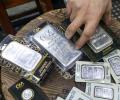
The Bureau of Indian Standards (BIS) is preparing to significantly increase its silver jewellery testing capabilities and expand its national laboratory network, driven by a shift in consumer demand from gold to silver and a broader push for enhanced product certification and surveillance.

Indian companies, including NBFCs, filed proposals with the RBI to raise $6.08 billion through external commercial borrowings (ECBs) and foreign currency convertible bonds (FCCBs) in June, marking a significant increase from the previous month.

'Some people may not like what I am saying, but shortcomings have to be pointed out. These deficiencies should be rectified within the next three months.' 'This is Gorakhpur, where our CM himself resides. If such shortcomings exist here, then what will happen?'

BMW India CFO Carsten Lammers has expressed surprise at the extensive scale and prolonged duration of tax and Customs litigation in India, advocating for faster dispute resolution and simpler procedures to ensure business stability.

Bharti Airtel, India's second-largest telecom operator, reported a 37.3 per cent rise in consolidated net profit to 8,167 crore for Q1 FY27, driven by the addition of high-paying premium customers, despite missing Bloomberg consensus estimates.

India launched 'Suryapath Tiranga', a unique initiative involving over 50 Indian missions globally, to digitally relay images of the tricolour across multiple time zones, starting from Fiji, to mark the country's 80th Independence Day.

Premature surrender and withdrawal of life insurance policies in India have surpassed maturity payouts over the past five years, indicating a growing trend of policyholders exiting long-term policies before their full tenure, according to data presented in the Lok Sabha.

'All these reports and announcements by the US seem like attempts to gain a lever in trade deal negotiations with India.'

=The investigation is examining the circumstances surrounding the aircraft's sudden altitude variation and the actions of the flight crew.
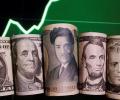
India's foreign exchange reserves increased by USD 6.118 billion, reaching USD 682.354 billion for the week ending July 24, according to the Reserve Bank of India.

India's banking system liquidity has fallen to its lowest level in over three weeks, driven by robust credit growth and potential RBI intervention in the foreign exchange market, according to the latest data from the Reserve Bank of India.

The Centre has notified 40 questions for the upcoming Census 2027, including caste and place of Covid vaccination, marking the first time caste details will be collected as part of the decadal exercise. The population enumeration will be a fully digital process, with an option for self-enumeration.

Prime Minister Narendra Modi, in his 80th Independence Day address, expressed strong confidence that India will achieve developed nation status by 2047, urging citizens to embrace big dreams and unwavering resolve to realise 'Viksit Bharat'. He highlighted India's economic transformation and significant growth in various sectors, including defence production, electronic manufacturing, and mobile phone production.
GSTN has put on hold its planned enhancements to the e-way bill system, providing businesses with crucial time to adapt to the proposed changes amid widespread industry concerns.

'Think of the brain like a machine, and Alzheimer's is like rust.'
'Like a rusty machine breaks down, a rusty brain also breaks down. And when it breaks down, you have memory loss, cognitive issues and so on.'

India's fresh investment plans in Q1FY27 surged 71 per cent to 14.77 trillion, primarily driven by four large nuclear power projects worth 6.5 trillion, according to investment monitoring firm Projects Today. Excluding these nuclear projects, fresh investment plans actually declined 4.27 per cent quarter-on-quarter.

The Indian government has summoned Meta's global head of public policy after Prime Minister Narendra Modi's Facebook post, addressing youth and promising action against paper leaks, was temporarily removed. Meta attributed the removal to a 'glitch' in its automated content filters, an explanation the government deems insufficient, demanding further discussions.

The number of individuals who declared a gross income of Rs 100 crore or more in their income-tax returns had risen to 301 in 2022-23, moderated slightly to 284 in 2023-24, then climbed to 415 in 2024-25.

Whether you're politically active or simply an everyday internet user, these are ten digital traps worth understanding.

The biggest challenge to widespread deployment is no longer AI. It is the financial and commerce infrastructure that was built decades ago for deterministic software and human interactions -- not autonomous AI agents.

Senior NCP (SP) leader Jayant Patil has criticised the Maharashtra government over farmer suicides and crimes against women, alleging widespread corruption within the ruling alliance.

Cricketer-turned-politician Harbhajan Singh revealed in a podcast interview that his decision to switch from the Aam Aadmi Party (AAP) to the Bharatiya Janata Party (BJP) stemmed from the AAP government's alleged neglect of his concerns regarding drug abuse and sports promotion in Punjab.

The Delhi High Court has declined to halt the Centre's HPV immunisation campaign, noting that data on 5.5 million administered vaccines showed no 'instant harm'. However, the court emphasised that 'half-baked vaccines' should not be given to the public and raised 'serious issues' regarding past protocol violations in vaccine testing and certification.

A research paper by the National Council of Applied Economic Research (NCAER) recommends that Bihar revoke its alcohol ban, citing its failure to reduce violence against women and a rise in illicit drug and alcohol consumption. The report suggests that reinstating the liquor excise tax would significantly increase state revenues and decrease enforcement costs.

Two former employees of a Delhi-based pharmaceutical firm have been booked for allegedly cheating, forging documents and impersonating to secure government tenders, including supplies to Army hospitals.

The Indian government has defended its E20 ethanol blending programme, stating that extensive testing and field experience show no evidence of abnormal engine wear, corrosion, or reduced vehicle life, despite a potential 2-6% reduction in fuel economy.

IIT Madras's Centre of Excellence for Road Safety has organised its first international hackathon, focusing on AI in road safety. The event brought together participants from India and other BIMSTEC nations to develop data-driven, technology-enabled solutions for the region, which faces a high number of road fatalities annually. The hackathon aims to foster collaboration among governments, academic institutions, and regional bodies to address this critical issue.

A digital profiling exercise by the Delhi government has revealed significant infrastructure deficiencies in government schools, including shortages of drinking water taps, lack of facilities for children with special needs, and structurally unsafe buildings.

US President Donald Trump has signed two executive orders aimed at cracking down on 'birth tourism' and limiting eligibility for birthright citizenship, weeks after the Supreme Court rejected a similar directive.

The Ministry of Heavy Industries (MHI) anticipates disbursing approximately 4,700 crore in incentives under the automotive PLI scheme in FY27, more than double the previous two years, while also exploring financing mechanisms for electric buses and trucks and promoting domestic manufacturing of critical EV components.

India's nine core infrastructure sectors recorded a five-month high production growth of 5 per cent in June, primarily boosted by significant increases in the output of cement, electricity, and the newly added iron ore, despite declines in crude oil, natural gas, refinery products, and fertiliser.

'It could be in IT, it could be in administration, it could be in legal, it could be in technical services, but entry level jobs are rapidly disappearing because AI is taking them over.' 'So, the big question what would happen if the bottom rung of the ladder is removed?'

Education sector experts agree that using the "best technology" was essential to ensure students did not have to sit for an examination all over again because of a question paper leak.

SBI Funds Management, India's largest asset management company, has set its IPO price band between 545 and Rs 574 per share, valuing the company at 1.2 trillion. The management explained the 'moderate' valuation aims to instil investor confidence amidst market uncertainty, while also highlighting plans for AI integration, expansion into GIFT City, and new alternative investment funds.

Chhattisgarh's latest police recruitment exam results have drawn widespread attention after a bizarre mix of candidate names, such as 'News', 'Space Rani', 'He Ram' and 'Tufail', surfaced on the qualifying list, prompting the Opposition Congress to allege irregularities, even as candidates came forward to defend their unique monikers.
